The Most Overrated PC Components Gamers Waste Money On (And What to Buy Instead)
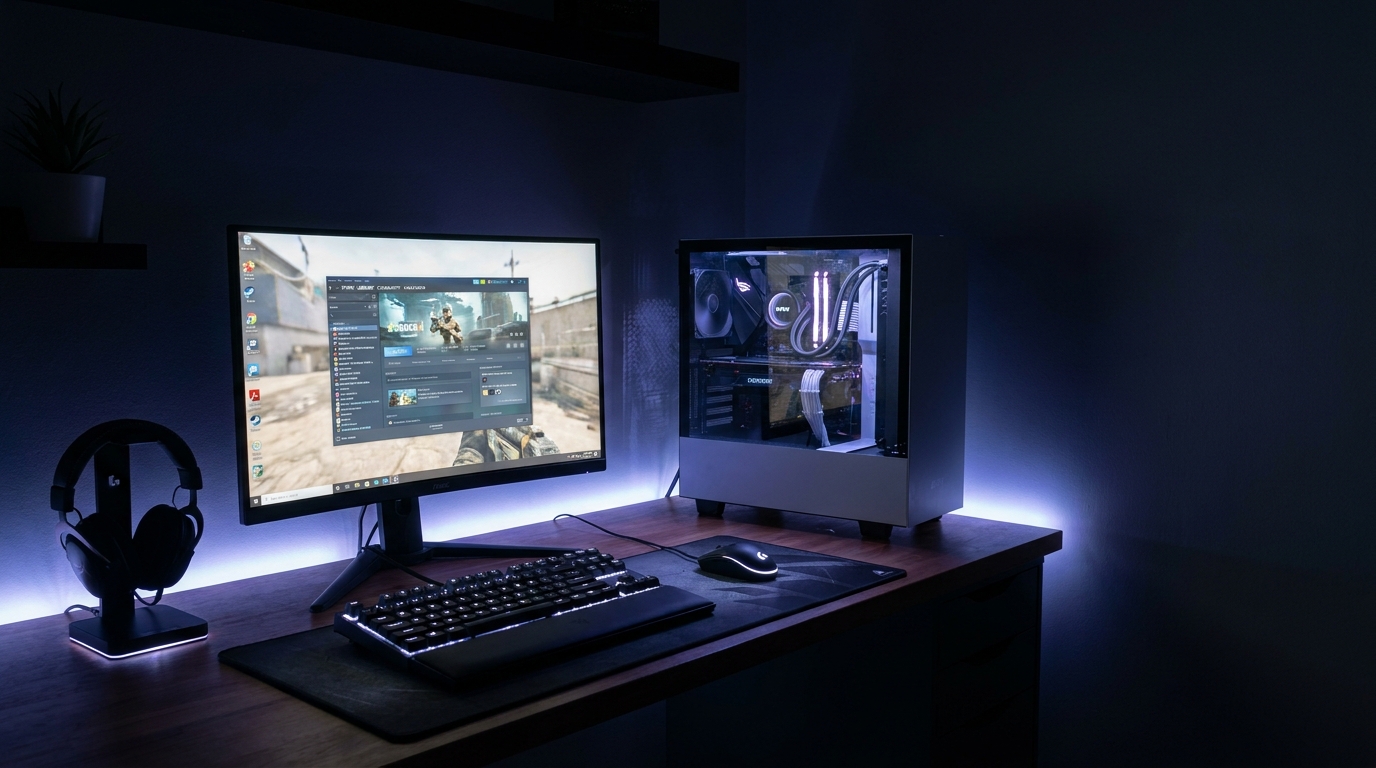
The gaming PC market is exceptionally good at creating the impression that more expensive always means meaningfully better. Premium branding, RGB lighting, impressive numbers in marketing materials, and community enthusiasm around specific products combine to direct money toward hardware upgrades that produce minimal real-world gaming improvement. The result is that a significant portion of gaming hardware spending goes toward components that benchmark well in controlled scenarios and make almost no difference during actual gameplay.
Choosing the right gaming PC hardware from starts with understanding which upgrades deliver measurable performance gains and which ones are largely driven by marketing rather than real gaming benefits. The components discussed in this article are not bad products. They are simply categories where the premium being charged consistently exceeds the gaming performance improvement they deliver, making other upgrade paths a far better investment for most gamers.
Extremely High-Speed RAM Beyond Platform Requirements
Memory speed matters for gaming in ways that are real but tightly bounded. The improvement from running RAM at a reasonable XMP speed rather than BIOS default is genuine and worth capturing through a free settings change. The improvement from running DDR5-7200 versus DDR5-6000 at equivalent timings in gaming workloads is much smaller and often statistically indistinguishable from run-to-run variance in the same game.
The premium that extreme-speed memory kits command over well-specified mid-to-high speed alternatives is substantial. The gaming frame rate return on that premium, measured across a realistic library of titles at the resolutions and settings most players actually use, is consistently marginal. Memory manufacturers are very aware that high-speed numbers are compelling in marketing and price their products accordingly. The gaming performance data does not support paying those premiums for the gaming use case.
What to buy instead: A dual-channel kit at a speed well-supported by the specific CPU platform being used, with timings that represent genuine performance rather than inflated speed numbers with loose timings, delivers the vast majority of memory-related gaming performance at a meaningful price reduction versus flagship speed bins.
PCIe Gen 5 NVMe Storage for Gaming
PCIe Gen 5 NVMe drives deliver sequential read speeds that are genuinely impressive, exceeding 12,000 megabytes per second in some configurations. These numbers are real. Their relevance to gaming frame rates is not. Gaming does not saturate PCIe Gen 4 NVMe storage in ways that Gen 5 would meaningfully address, and the scenarios where storage speed affects in-game performance involve asset streaming that is more sensitive to random access latency than to sequential throughput, a metric where the generational differences are far smaller.
PCIe Gen 5 NVMe drives also run significantly hotter than Gen 4 alternatives and require heatspreaders or active cooling to avoid throttling, adding thermal management complexity to a component that was already performing adequately in Gen 4 form. The price premium is substantial. The gaming benefit is essentially unmeasurable in real-world play compared to a quality Gen 4 NVMe drive.
What to buy instead: A quality PCIe Gen 4 NVMe drive at a mainstream price point delivers gaming storage performance that is fully adequate for every current title, with better thermal behavior and without the premium that Gen 5 specifications command without delivering proportional gaming value.
Flagship CPUs for GPU-Limited Gaming Setups
Processor enthusiasm drives a significant amount of gaming hardware spending toward CPU tiers where the gaming returns do not justify the cost relative to what those funds could accomplish elsewhere in the build. The performance difference between a flagship processor and a well-specified mid-range processor in GPU-limited gaming scenarios, which describes the majority of gaming configurations at 1440p and above, is consistently small and in many titles unmeasurable.
Flagship CPUs deliver their value in heavily multi-threaded workloads including video encoding, three-dimensional rendering, and software compilation. In gaming, where the primary constraint is typically GPU throughput rather than CPU compute capacity, paying the premium for the highest-tier processor in a given platform generation produces marginal frame rate improvements in most titles while consuming budget that would have produced larger gaming performance improvements if redirected toward the GPU.
What to buy instead: A mid-to-upper-mid-range processor from the current generation that exceeds the CPU performance requirements of the GPU it is paired with at the target resolution. Allocating the budget saved relative to a flagship CPU toward a higher GPU tier produces larger gaming performance improvements in virtually every game at every common gaming resolution.
Elaborate Liquid Cooling for Mainstream Gaming Loads
Custom liquid cooling loops and premium all-in-one liquid coolers are genuinely impressive pieces of engineering and can reduce CPU temperatures meaningfully compared to mid-range air cooling alternatives. For competitive overclockers and users running the most thermally demanding workloads on the highest-TDP processors, premium cooling produces real operational benefits.
For the mainstream gaming use case, a quality mid-range tower cooler handles the thermal output of virtually every mainstream gaming processor at its rated boost frequencies without throttling, at a fraction of the cost of elaborate liquid cooling solutions. The frame rate improvement from switching from a quality air cooler to a premium liquid cooler in a gaming-focused build that does not involve heavy overclocking is minimal to nonexistent. The processor was already sustaining its rated frequencies with the air cooler.
What to buy instead: A mid-range tower cooler from a reputable manufacturer with a TDP rating appropriate for the installed processor. Redirect the cost difference toward GPU, display, or other hardware that has a direct effect on gaming frame rates or visual quality.
Premium Motherboards Beyond Solid Mid-Range Specifications
Motherboard premium features generate genuine enthusiasm in building communities and provide real benefits for specific use cases including heavy overclocking, extreme multi-GPU configurations, and niche professional workloads. For gaming specifically, the performance difference between a solid mid-range motherboard and a premium flagship motherboard on the same platform is essentially zero.
The motherboard provides the platform on which the components that actually determine gaming performance operate. Beyond ensuring stable power delivery to the processor, reliable memory speed support, adequate PCIe lane allocation for the GPU, and functional I/O for the peripherals the build requires, additional motherboard features do not translate to higher frame rates. Premium aesthetic materials, additional RGB zones, reinforced PCIe slots, and supplementary overclocking software all command pricing premiums that gaming performance data does not justify.
What to buy instead: A mid-range motherboard from a reputable manufacturer that provides stable VRM design for the processor being installed, reliable memory support at the intended speed, and the I/O features the build actually requires. The cost difference versus a flagship board, redirected toward the GPU or display, produces gaming improvements that are immediately visible.
What Actually Deserves the Gaming Budget
The components where gaming hardware spending produces consistent, measurable improvements in actual gameplay are the GPU at the primary resolution and quality settings the player uses, the display in terms of resolution, refresh rate, and adaptive sync capability, sufficient RAM in dual-channel configuration at platform-appropriate speeds, NVMe storage for fast load times and smooth asset streaming, and adequate cooling to ensure that all of the above can sustain their rated performance for the full duration of a gaming session.
Every dollar redirected from overrated premium tiers in the categories above toward better GPU capability or a higher-refresh display is a dollar that produces a gaming improvement the player will notice every time they sit down to play. That is the standard by which gaming hardware spending deserves to be evaluated.
